Pages

Monday, February 7, 2011

Are your students ready for dissection?


Teachers get very excited about the prospect of dissection with students.  It's a hands-on approach to teaching anatomy and an activity we would expect the students to be excited about jumping into.....so why did our first attempt seem to be a bit of a let-down?

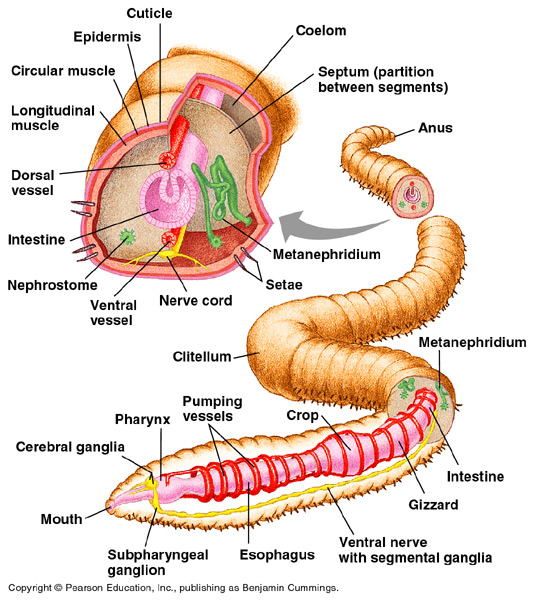
When we look at a fabricated textbook style diagram of an earthworm, the picture consists of bright colors, and neat arrows points out various parts of the anatomy. Very neat (and odorless.)

The reality of dissection is different in every way, though, it is not the bloody mess that one may imagine.  The earthworm used in our dissection lesson did not come out of the backyard, it had been preserved for dissecting and was part of a kit of various specimens.

The external body was examined to determine the location of the anterior and posterior ends and the dorsal and ventral surfaces. The worm was pinned to the tray with the dorsal side up and prepared for cutting.

Nervously, the student cut the worm as instructed and pulled the skin back for internal observation.  At first sight, it looked dry and dirty.  Parts were not as easy to identify as they appeared in the neat, colorful textbook diagram.  After placing the specimen under a dissecting scope (also known as a stereo microscope) the students were able to locate and identify some parts of the anatomy.

The activity provided the students an opportunity to observe firsthand the internal parts of an organism. Overall, they expressed no disappointment, however, their final comments were: "Can we do something bigger next time?"

Tips for a successful dissection:
  1. Prepare in advance by learning about the systems of the body, particularly, the circulatory, digestive, nervous, reproductive, skeletal and muscular.
  2. Give the students an idea of what to expect.
  3. Have plenty of rubber gloves available.
  4. A high power magnifying glass or dissecting scope are helpful when the specimen is small.
  5. Stay engaged with the students and guide them through the steps. 
If you attempt a dissection with your students I wish you a successful and fun lesson. 

Wednesday, December 1, 2010

The worst kids in the history of the world.

Each year, my boys and I kick of the Christmas holiday season by reading one of our favorite books, The Best Christmas Pageant Ever, by Barbara Park. It begins: "The Herdmans were absolutely the worst kids in the history of the world." OK, the author has our attention. The conflict starts as soon as the reader becomes acquainted with the Herdman clan and he/she is tempted to discover just how bad the Herdmans can be. The plot thickens as they become the center of the traditional Christmas Pageant.

The Best Christmas Pageant Ever is not a warm and fuzzy Christmas story of sugar plums or Santa Claus. It is a humorous tale of five children who have never heard of the birth of Jesus. The author brilliantly touches the heart by imagining the revelation of Christ to the worst kids in the history of the world. The reader is left with a new perspective of the miracle of Christ's birth.

This story is an enjoyable way for us to begin the Christmas season. I hope you will consider checking it out to share with your family.

The Best Christmas Pageant Ever

Wednesday, November 17, 2010

3 Easy Steps to Building a Love for Reading

People are constantly asking me how I get my boys to read AND enjoy it. Honestly, I'm surprised by the question. Don't all children like to read? It's hard to understand that some don't. I've always loved reading and can't imagine what life would be like without great stories and reference guides. Here are some secrets that I have learned. Three easy steps to building a love for reading are to share, model and promote.

I've always shared my love of stories by reading to my children every day, sometimes, several times a day. Reading to children gets them interested in pictures and text and motivates them to want to decipher the books for themselves. Even after my children broke the code, I have continued to read aloud to them. Hearing a story read aloud places the emphasis on enjoying the story and not on making it a lesson in decoding and comprehension. By sharing books with children, it sets an example of reading for the fun of it and motivates children to want to read for themselves.

Another important step in building a love of reading is to model it. When children witness mom and dad reading, they see it as a common and necessary activity, not a separate chore that must be done for 15 minutes a day. Children need to see the necessity for all books, such as cookbooks for creating meals, dictionaries for looking up new words, textbooks for adult education courses, reference books for hobbies, bibles for spiritual guidance and of course, fiction novels for entertainment. When children notice the necessity for books, they too will reach for them when seeking information or entertainment.

The final step in building a love of reading is to promote it by providing children access to a variety of books. The best way to start is by selecting reference books on anything that interests your child. Yes, books are a costly investment, so think about all your resources, such as the library, thrift stores, yard sales, book clubs and gifts from family & friends. It's hard to promote reading when the bookshelves are empty. Don't miss an opportunity to fill them up, so that your child always has a variety of new reading material available.

Three easy steps to building a love for reading: share, model and promote. Happy Reading!

Looking for a good book? KidsReads is a free site that features what's new, reviews, author information and much more. Check it out. http://www.kidsreads.com/