Homeschool conventions have been taking place this spring all around the country. Conventions offer a wealth of information and inspiration for families who home educate, whether you are new or have been doing it for years. But, what about families who don't live near a convention site or whose budget will not accommodate the expenses? You can save money and still reap the benefits of the convention by finding the information on the web.
Did you know that a simple Google search for "homeschool convention" provides over two million results? Many of those will provide details on the speakers and vendors who attended conventions around the country. The first search I found was for a convention in Cincinnati, Ohio. Although the convention is passed and Cincinnati is 630 miles from home, the information is still available to see which speakers held workshops and which vendors had booths in the exhibition hall with their curriculum and products available.
Even if you are unable to attend a convention, having a list of homeschool vendors can be a great resource for finding curriculum with which you may not be familiar or may not be aware of it's existence. Sometimes we don't know what we are looking for, until it finds us. While perusing the list of vendors at the FPEA in Orlando, Florida I came across one called Homeschool Tech, which offers a video based, hands-on course to learn to build computers. Before I saw the company name on the list of exhibitors at the convention, it had not occurred to me that such a course existed for homeschoolers because I had not thought of looking for one.
Also on the web site for the convention in Cincinnati, Ohio was an impressive list of speakers, each with a short biographical sketch. Generally, speakers at a convention have years of homeschooling expertise and experience to share that can be helpful to a novice. A search at your local library or Amazon will produce many results of those homeschool pioneers whose books offer inspiration, encouragement and wisdom.
So, even if you are unable to attend a homeschooling convention, their web sites can still offer instant access to homeschool resources.
If this article was helpful to you, please share it with others.

Monday, May 30, 2011

Thursday, May 12, 2011
Are You Considering Homeschool?
A common question from parents who are considering homeschooling is, "Where do I start?" It's a difficult question to answer because there are many different reasons for choosing homeschool education. The remarkable certainty is that there is a wealth of information available to help begin the journey.
 First, check your states requirements for homeschooling. You need to know if your state requires testing, evaluation, or attendance records. Having this information will help you plan your goals.
Next, decide what is the purpose of homeschooling? Religious freedom, special educational needs and academic goals are some reasons people choose to homeschool. Understanding your purpose for educating your children at home will help you choose a curriculum to suit your needs.
Finally, what style education matches the needs of you and your children? Some families choose a traditional approach to education, which may resemble the style used in a conventional classroom, while the extreme opposite approach is unschooling, where little or no curriculum or schedule demands are put on the children. Knowing which style of education you are happy with will help in planning your schedule and choosing a curriculum best suited to that style education.
The research in planning a homeschool adventure can seem overwhelming because there is so much information available. It is recommended that you consider the requirements, your purpose and the style to answer the question, "Where do I start?"
Where to look for information:
The Homeschool Legal Defense Association (HSLDA) is a wealth of resources and has a link to state laws. http://www.youcanhomeschool.org/starthere/default.asp?bhcp=1
Cathy Duffy's 100 Top Picks for Homeschool Curriculum describes many popular homeschool curriculum available and helps match the students learning style to a curriculum suited to the child's needs and the style of education you prefer. Check your local library or click here for a link to Amazon:100 Top Picks for Homeschool Curriculum: Choosing the Right Curriculum and Approach for Your Child's Learning Style

The Homeschool Buyers Co-op is a homeschool co-op designed to pool the purchasing power of the membership. It is a great source of homeschool materials by subject matter and other resources. Even if you are not ready to make purchase, this web site provides a sample of different types of homeschool curriculum available.
 First, check your states requirements for homeschooling. You need to know if your state requires testing, evaluation, or attendance records. Having this information will help you plan your goals.
 Next, decide what is the purpose of homeschooling? Religious freedom, special educational needs and academic goals are some reasons people choose to homeschool. Understanding your purpose for educating your children at home will help you choose a curriculum to suit your needs.
Finally, what style education matches the needs of you and your children? Some families choose a traditional approach to education, which may resemble the style used in a conventional classroom, while the extreme opposite approach is unschooling, where little or no curriculum or schedule demands are put on the children. Knowing which style of education you are happy with will help in planning your schedule and choosing a curriculum best suited to that style education.
The research in planning a homeschool adventure can seem overwhelming because there is so much information available. It is recommended that you consider the requirements, your purpose and the style to answer the question, "Where do I start?"
Where to look for information:
The Homeschool Legal Defense Association (HSLDA) is a wealth of resources and has a link to state laws. http://www.youcanhomeschool.org/starthere/default.asp?bhcp=1
Cathy Duffy's 100 Top Picks for Homeschool Curriculum describes many popular homeschool curriculum available and helps match the students learning style to a curriculum suited to the child's needs and the style of education you prefer. Check your local library or click here for a link to Amazon:100 Top Picks for Homeschool Curriculum: Choosing the Right Curriculum and Approach for Your Child's Learning Style
The Homeschool Buyers Co-op is a homeschool co-op designed to pool the purchasing power of the membership. It is a great source of homeschool materials by subject matter and other resources. Even if you are not ready to make purchase, this web site provides a sample of different types of homeschool curriculum available.
Thursday, April 28, 2011
Measuring UP - How To Get The Most Out Of Testing

As we conclude the year's studies and anticipate summer break, many parents may be considering year end testing. Unfortunately, standardized tests may have gained an imperfect reputation with some students and parents if results were adversely misused in the past. Though, when used properly, testing can have great benefits, and there are different types to suit your needs. Standardized tests that are generally given to school children are the most popular, though there are also diagnostic assessments and clinical tests which can be beneficial.
A standardized test is provided by an approved administrator and can take up to six hours over the span of two to three days to complete. The conditions of administering, scoring and interpreting are meant to be consistent, or "standard" in manner, which is why tests are closely guarded and the administrator must be approved. Some of the most common are the California Achievement Test (CAT), the Iowa Test of Basic Skills (ITBS), and Stanford Achievement Test. Subjects tested are math, language, science and social studies, which may also be composed of sub tests. The scores from the tests are collected and used to compare the academic knowledge of students across the nation. Many people believe standardized tests to be unfair due to bias and/or environmental factors, though the results can offer parents valuable information. Not only can they advise parents of a their child's academic mastery compared to children around the nation, the sub tests can be an indicator of a child's strengths and weaknesses in specific areas, results can be used to compare a students year to year growth and the score on reading can help parents choose appropriate level books for their children to read. Ideally, a standardized test would be used for a child no younger than nine years old or before beginning third grade, though, the maturity of the child and the purpose for giving the test can be a factor in determining when it is an appropriate tool. Standardized test do not measure the ability to think or create, but are valuable to parents for gathering academic information for curriculum choices and comparing a child's academic growth from one year to the next.
Diagnostic Assessments are less structured than standardized tests and can by given by a parent or qualified diagnostician. The amount of time for a diagnostic can vary greatly according to the student and the purpose for the assessment. They are generally used to determine a child's strengths and weaknesses in specific reading or math skills or to learn about a child's learning preference and personality. This test is a great tool for a parent who is teaching children around six to nine years of age reading or math skills and wishes to learn which skills the student needs to learn and may help in selecting a curriculum for his/her child's specific needs, such as language development, phonological awareness, word identity and oral reading fluency. Other diagnostic assessments help parents understand a child's learning preference (auditory, visual or kinesthetic) and/or whether the child's personality is introverted or extroverted. When choosing a curriculum best suited to a child, it is important to understand the modality in which a child learns information best. Matching a student to a curriculum suited to his/her learning preferences sets them up for success and a greater sense of accomplishment.
Clinical testing includes psychological evaluations which measure IQ and diagnose visual, auditory or verbal processing disorders. Psychological evaluations should be used only if a parent believes a child may have obstacles in learning through the use of conventional methods and seeks a qualified, licensed practitioner to diagnose a learning disability. While all children develop at different rates, a parent may observe standard markers of language development and social skills that indicates psychological evaluation is necessary. When choosing a curriculum for a child who is challenged in reading, writing or attention, clinical testing will diagnose specific weaknesses and allow parents to choose a curriculum suited to his/her ability.
In the past, testing has gained a bad reputation when results were used in ways that blocked a child's development, which is unfortunate. When used properly, standardized tests, diagnostic assessments and clinical evaluations can help a parent choose the tools that optimize the students strengths, while building his/her weaknesses. Students should be taught that tests have valuable information to be used to help us reach our goals and the score in not an indication of who we are, but of the gifts we have.
ITBS or Stanford Achievement Test through Bob Jones University.
CAT (California Achievement Test) through Seton Testing Services.
Cognitive Diagnostic Assessment for Education: Theory and Applications

What Color Is Your Parachute? For Teens, 2nd Edition: Discovering Yourself, Defining Your Future (What Color Is Your Parachute? for Teens: Discovering Yourself)

Discover Your Child's Learning Style: Children Learn in Unique Ways - Here's the Key to Every Child's Learning Success

Uncovering Student Thinking in Mathematics: 25 Formative Assessment Probes
Alpha Omega LIFEPAC Diagnostic Tests for grades 1-8
www.homeschoolbuyersco-op.org (Homeschool Buyers Co-Op is not a testing site, but offers a great selection of testing tools and is free to join.)
Monday, March 28, 2011
Kids Survive Writing Workshop
 Imagine a writing lesson with enthusiastic students who artfully craft work which is creative, organized and interesting. Recently, I witnessed a class full of students who happily attended a writing workshop led by Andrew Pudewa. His humorous wit and lighthearted nature put the children immediately at ease. His clear, articulate style helped them effortlessly create original writing.
Using the Institute for Excellence in Writing (IEW) method, Mr. Pudewa guided the students through the construction of a Story Sequence Chart after reading a short historical legend of Robert De Bruce. The story's characters, setting, problem and resolution were charted on the board to give the students a guide to follow when scripting their own composition. Students integrated "Stylistic Dress-Ups" into their original writing for added variety, character and expression.
Not only did the students survive the workshop, they thoroughly enjoyed it. Each took home with them a well written original story, greater confidence in writing and the experience of meeting Mr. Pedewa. Sharing his insight and humor was a delight and honor.
I highly recommend the IEW workshops for teachers and/or students if the opportunity arises. For those who wish to improve their students writing or have reluctant writers, check out the Institute for Excellence in Writing's website and discover a writing program that can change a student's attitude about writing from one of anxiety and frustration to one of pleasure and confidence.
Wednesday, March 16, 2011
Mom Bans English Language
I remember the day I started our new vocabulary program. One of my sons had a tendency to overgeneralize by using the words always and never in reference to his brothers behaviors...and they weren't targeted at positive actions. I grew frustrated at the bickering that ensued after one of his "you always put the cap back on the lemonade when you know I want some" type of statements. Also, during times of stress the boys would use vocabulary that was not so pleasant. Desperate for peace, I had to create a program that would decrease inflammatory speech that often led to arguments.

Happy was my day when the inspiration for the BANNED WORD LIST arose. From the name, one would guess that certain words are banned from the vocabulary in our family. It started with always and never, which are words many would not believe to be negative or harmful, but the context in which my son was using them was inappropriate because it was not true that his brother "never" cleaned his room. Quickly, the list grew with words that are antagonistic, pessimistic or simply unfavorable. The penalty for using banned words is $1. Though, for others who consider this system, any creative retribution could work. (ie The loss of privileges, particularly TV or video time, or additional chores, like picking weeds.)
My decision to carry on the BANNED WORD LIST was cemented when my son expressed his disapproval. His claim was that sometimes we don't know what we are going to say. HA! Exactly! We should be conscious of what we are going to say. Our words should be spoken thoughtfully, with kindness and respect. The lesson I hope to teach is not that one should be punished when using bad words, but to increase the mindfulness of how words can effect others.
Additionally, using the BANNED WORD LIST is expanding the children's vocabulary because they are forced to think of different ways to express their thoughts. However, it is known that using a similar word to express a negative thought, will only add new words to the list.
My boys tease me that soon I will ban the entire English vocabulary.....well, it might inspire them to practice their foreign language more often, but I would never ban the good words.
Let your speech be always with grace, seasoned with salt, that ye may know how ye ought to answer every man. Colossians 4:6
Monday, February 7, 2011
Are your students ready for dissection?
 Teachers get very excited about the prospect of dissection with students. It's a hands-on approach to teaching anatomy and an activity we would expect the students to be excited about jumping into.....so why did our first attempt seem to be a bit of a let-down?
When we look at a fabricated textbook style diagram of an earthworm, the picture consists of bright colors, and neat arrows points out various parts of the anatomy. Very neat (and odorless.)
The reality of dissection is different in every way, though, it is not the bloody mess that one may imagine. The earthworm used in our dissection lesson did not come out of the backyard, it had been preserved for dissecting and was part of a kit of various specimens.

Nervously, the student cut the worm as instructed and pulled the skin back for internal observation. At first sight, it looked dry and dirty. Parts were not as easy to identify as they appeared in the neat, colorful textbook diagram. After placing the specimen under a dissecting scope (also known as a stereo microscope) the students were able to locate and identify some parts of the anatomy.
The activity provided the students an opportunity to observe firsthand the internal parts of an organism. Overall, they expressed no disappointment, however, their final comments were: "Can we do something bigger next time?"
Tips for a successful dissection:
- Prepare in advance by learning about the systems of the body, particularly, the circulatory, digestive, nervous, reproductive, skeletal and muscular.
- Give the students an idea of what to expect.
- Have plenty of rubber gloves available.
- A high power magnifying glass or dissecting scope are helpful when the specimen is small.
- Stay engaged with the students and guide them through the steps.
If you attempt a dissection with your students I wish you a successful and fun lesson.
Wednesday, December 1, 2010
The worst kids in the history of the world.
 Each year, my boys and I kick of the Christmas holiday season by reading one of our favorite books, The Best Christmas Pageant Ever, by Barbara Park. It begins: "The Herdmans were absolutely the worst kids in the history of the world." OK, the author has our attention. The conflict starts as soon as the reader becomes acquainted with the Herdman clan and he/she is tempted to discover just how bad the Herdmans can be. The plot thickens as they become the center of the traditional Christmas Pageant.
The Best Christmas Pageant Ever is not a warm and fuzzy Christmas story of sugar plums or Santa Claus. It is a humorous tale of five children who have never heard of the birth of Jesus. The author brilliantly touches the heart by imagining the revelation of Christ to the worst kids in the history of the world. The reader is left with a new perspective of the miracle of Christ's birth.
This story is an enjoyable way for us to begin the Christmas season. I hope you will consider checking it out to share with your family.
The Best Christmas Pageant Ever

Wednesday, November 17, 2010
3 Easy Steps to Building a Love for Reading
 People are constantly asking me how I get my boys to read AND enjoy it. Honestly, I'm surprised by the question. Don't all children like to read? It's hard to understand that some don't. I've always loved reading and can't imagine what life would be like without great stories and reference guides. Here are some secrets that I have learned. Three easy steps to building a love for reading are to share, model and promote.
I've always shared my love of stories by reading to my children every day, sometimes, several times a day. Reading to children gets them interested in pictures and text and motivates them to want to decipher the books for themselves. Even after my children broke the code, I have continued to read aloud to them. Hearing a story read aloud places the emphasis on enjoying the story and not on making it a lesson in decoding and comprehension. By sharing books with children, it sets an example of reading for the fun of it and motivates children to want to read for themselves.
Another important step in building a love of reading is to model it. When children witness mom and dad reading, they see it as a common and necessary activity, not a separate chore that must be done for 15 minutes a day. Children need to see the necessity for all books, such as cookbooks for creating meals, dictionaries for looking up new words, textbooks for adult education courses, reference books for hobbies, bibles for spiritual guidance and of course, fiction novels for entertainment. When children notice the necessity for books, they too will reach for them when seeking information or entertainment.
The final step in building a love of reading is to promote it by providing children access to a variety of books. The best way to start is by selecting reference books on anything that interests your child. Yes, books are a costly investment, so think about all your resources, such as the library, thrift stores, yard sales, book clubs and gifts from family & friends. It's hard to promote reading when the bookshelves are empty. Don't miss an opportunity to fill them up, so that your child always has a variety of new reading material available.
Three easy steps to building a love for reading: share, model and promote. Happy Reading!
Looking for a good book? KidsReads is a free site that features what's new, reviews, author information and much more. Check it out. http://www.kidsreads.com/
Saturday, October 23, 2010
Three Critical Factors for Effective Teaching
 Teachers work hard to prepare and execute lessons for effective teaching and wish their students to succeed. There are some students that teachers can relate to easily, while others are harder to reach. Why? What is the key to developing a strong rapport with all students and igniting their passion for learning? How can teachers teach effectively to insure growth and/or success for all students? There are three critical factors to building strong connections with students that effect their learning. Those factors include learning style, personality type and gender preferences. Having a strong grasp on those factors will build solid relationships between teacher and student, therefore increasing a students desire to learn and chance for success. That's effective teaching!
By understanding learning styles, a teacher can plan lessons according to each students strengths, thus enhancing the students performance and retention of information. The three dominant learning styles are visual, auditory and kinesthetic. A visual learner will process info by sight and creates pictures in his/her mind. The visual learner is sensitive to facial expressions, likes things that are "pretty" and prefers an orderly environment. The auditory learner processes information by hearing and is sensitive to sounds. He or she will pick up auditory cues quickly, needs verbal reassurance and may talk to him/herself. The kinesthetic learner processes information by touch, sense and smell and learns best through a hands-on approach. He or she needs physical reassurance and is sensitive to how he/she is touched. Each student processes information by unique means. Understanding learning styles can help a teacher present information to students in a fashion that meets his/her needs and optimizes success.
Another critical factor that effects how students learn is the personality style. Most of us have heard the terms introvert and extrovert, but do we truly understand how personality style effects the relationship between the teacher and student? Often times students who are introverted are inappropriately labeled as "shy," while an extroverted student is labeled "undisciplined," both of which may not necessarlily be true. Understanding this trait can help a teacher adjust his/her teaching style to meet the needs of the student, particularly when the teacher and student have opposite personality styles. Introversion and extroversion determines how much external stimulus the brain wants to be happy. The introvert's brain has a high level of alertness and takes in a lot of data per second, therefore, leaning towards quiet, low stimulus. He/she prefers watching, reading, solitude and quiet hobbies. The extrovert, on the other hand, has a brain with a lower level of alertness and seeks out extra stimulus. The extroverted personality wants to be involved in activities, enjoys debating, is competitive and is easily bored. Understanding personality style can help a teacher divert trouble in communication and increase effectiveness in instruction. One extroverted teacher described a problem teaching a particular student before having knowledge of personality style differences. While teaching math, the teacher's questions would go unanswered by the student, therefore, leading her to believe he did not understand the material. What the teacher didn't know was that her introverted student needed time to process the information internally before discussing the math problems. After learning about the differences in personality style, the teacher allows the student more "think time," which allows the student time to process the information and allows the teacher to evaluate the students understanding more effectively.
The third factor that plays a great role in learning is gender. Certainly, males and females often have different interests and preferences, but why? Brain development plays a role in how males and females learn, but most curriculum is designed to be gender neutral. In early brain development the right side of males brains develop spatial and visualization before the language development in the left brain. Males have a tendency to be more efficient when focusing on one thing at a time. The female brain, however, develops on the left side earlier, which leads to early language development. Though the right brain develops at a slower rate, females are able to think "globally" because they can jump from left to right brain activities easily. Males are slower to develop hearing and often have trouble hearing a soft-spoken teacher, particularly if seated at a good distance. The differences in gender preferences could explain why some males do not develop early art skills for drawing pictures as female students. The differences in the development between males and females plays a huge role in a students learning. A teacher can easily understand the needs and recognize the preferences of a student of the same gender. The challenge is in learning to recognize the needs of those of a difference gender and adjust expectations and requirements accordingly.
Every teacher wants to be effective and reach all his/her students for success. Learning more about these three critical factors can mean victory in developing rapport with all students and creating a positive environment where all students are recognized for his/her individual characteristics and therefore, attaining success. Teachers who understand the three critical factors for effective teaching know that the key to reaching all students lies in understanding how learning style, personality type and gender preferences effect learning.
Learn about the brain

Monday, July 19, 2010
Method Monday
How did a group of mom's turn Monday into one of the best days of the week? It's our "Method" day, where we meet to discuss a pre-planned topic on teaching methods.
It started when a mom in our homeschool group purchased a new writing curriculum for her children. She loved the program so much that she wanted to share it with all the moms. Along with the student's writing program, she had purchased an instructional teaching DVD, and generously agreed to watch it with all of us. We would need to meet for a series of several weeks and watch the program over time, as it was too lengthy for one sitting.
Each week, we looked forward to the evening when we met. We were excited to learn something new and share it with others. It was "grown-up" time where we could grow in our teaching and connect with other parents. Turns out, we all loved the writing program and decided to purchase it and begin using it with our own children, but that's not all that came out of our weekly meetings. We realized that connecting with other moms strengthened our bond as a group and deepened our insights on different teaching methods.
We grew to enjoy our weekly meetings so much that after completing the writing series, we decided to choose another topic to share. When Monday rolls around we are all excited about the evenings "Method" workshop. We've completed two workshop topics, are starting the third and planning the fourth.
Homeschooling is a vast opportunity to incorporate a plethora of topics into our children's development and the uniqueness of each child is a search for fostering his/her talents. As a parent and teacher, I multiply my skills in the sharing of ideas and information with others. The weekly "method" workshops has increased my circle of friends and expanded my perspective on new curriculum ideas.
Do you have a curriculum that you'd like to share?
It started when a mom in our homeschool group purchased a new writing curriculum for her children. She loved the program so much that she wanted to share it with all the moms. Along with the student's writing program, she had purchased an instructional teaching DVD, and generously agreed to watch it with all of us. We would need to meet for a series of several weeks and watch the program over time, as it was too lengthy for one sitting.
Each week, we looked forward to the evening when we met. We were excited to learn something new and share it with others. It was "grown-up" time where we could grow in our teaching and connect with other parents. Turns out, we all loved the writing program and decided to purchase it and begin using it with our own children, but that's not all that came out of our weekly meetings. We realized that connecting with other moms strengthened our bond as a group and deepened our insights on different teaching methods.
We grew to enjoy our weekly meetings so much that after completing the writing series, we decided to choose another topic to share. When Monday rolls around we are all excited about the evenings "Method" workshop. We've completed two workshop topics, are starting the third and planning the fourth.
Homeschooling is a vast opportunity to incorporate a plethora of topics into our children's development and the uniqueness of each child is a search for fostering his/her talents. As a parent and teacher, I multiply my skills in the sharing of ideas and information with others. The weekly "method" workshops has increased my circle of friends and expanded my perspective on new curriculum ideas.
Do you have a curriculum that you'd like to share?
Sunday, June 27, 2010
Be A Better Teacher
 Over the years I've read many books to help me in my parenting and teaching. I have completed a bachelors degree in elementary education and taught in various settings. I thought I had read the best of books and touched on all the topics of good teaching, but recently I read one that was packed with "aha" moments which confirmed that there's always more to learn in becoming a better teacher.
For me, reading Why Gender Matters, by Dr. Leonard Sax was like the times I'm caught up in a fiction book by one of my favorite writers. I sat curled in a chair reading for hours at a time, then I went to my husband and gave him highlights of the really good stuff. We talked about how the things Sax wrote apply to real life. It was so enlightening that I didn't want to put it down and wanted more when I reached the end. Thankfully, Sax did a great job of citing his sources and I can look up his research and get more.
Why was the contents of Why Gender Matters new to me? I think it's because I am a female. Sure, I've read books about boys, such as James Dobson's Bringing up Boys, but this one is differerent. Sax presents scientific information about how boys and girls are different genetically. As a female home educator teaching two boys, I haven't always related to them as "boys", but as students. Now I can understand that the methods I've used to teach and/or the expectations I have had of their behavior is in conflict because our gender. The dialogue with my husband helped further my understanding of the male - female differences.
The key to becoming a better teacher does not lie within the content being taught, but knowing how to relate to the student. Why Gender Matters can help parents and teachers understand the genetic differences in boys and girls and how and why they learn differently. Sax addresses topics that will help parents/teachers relate to the very young all the way through the teen years.
If you want to be a better teacher, I highly recommend you read Why Gender Matters by Leonard Sax. For effective parenting or classroom teaching, Sax shows how to recognize the gender differences and use them to help every boy and girl reach their potential.
5 minute interview of Dr. Sax.
http://www.youtube.com/watch?v=eXqiJLZm-DI
http://www.whygendermatters.com/
Monday, May 31, 2010
What's the purpose of a homeschool convention?
 There's nothing like a homeschool convention to get parents excited about their children's learning. Conventions offer motivational speakers, workshops and exhibits that help parents plan and organize their homeschooling goals. It's not only a time for parents, as graduation ceremonies and other activities are planned for children. The experience brings together people who are pioneers of homeschooling, eager to share their wisdom with those who are still rookies, or maybe just entering their first year.
Speakers at a homeschool convention are carefully chosen. They are veteran homeschoolers who can enlighten and inspire others. Hearing their message leaves the listeners with the determination to rise to the challenge of giving their children the best opportunities homeschooling has to offer. It makes the assignment that home educators have taken on become an exciting journey of life. It's comforting to discover that others have survived similar struggles and hearing their testimony can make challenges easier to conquer. The best teachers are those who have years of experience to share, which is why it is enlightening to hear the speakers at a homeschool convention.
Homeschool conventions offer workshops for vendors to share products and ideas with parents. This forum is helpful in considering curriculum choices. Listening to vendors present their materials in a workshop can help parents decide if the product will help them achieve the family's eductional goals. Workshops present a range of materials for academic subjects, organization and teaching strategies.
The exhibit hall is the place where vendors can display their products and services and answer parents questions about individual items. The exhibit hall allows parents and children to browse a wide range of curriculum products for all subjects. It is often difficult to find these products in our local communities, so it creates a lot of excitement to have all the choices available in one place.
There is much offered for children at a homeschool convention. For teens, it can be a recognition of graduation with a formal ceremony. For younger children there are fun, action-packed adventures for them to explore interesting facts, points of interest and other great discoveries combining geography, culture, history, music, art and games.
Attending a homeschool convention is an exciting step into the next year of home education. Parents and children arrive with eager anticipation and depart with an excited hope for a fantastic homeschooling journey and a trunk load of goods.
Wednesday, May 19, 2010
Top 5 Homeschool Books
Parents who are considering or have recently decided to homeschool can be overwhelmed with information. My oldest son had attended six years of Catholic school before we made the transition, and all my experience with schooling was developed through the institutionalized system of education. I sought any and all resources that would aid the transition into our new homeschooling journey. Though I learned a great deal, I was overloaded with too much information.
These are the top five homeschooling books that I believe to be invaluable resources to homeschoolers, particularly in the beginning stages. Each veteran homeschooler has his/her personal favorites and would have varying opinions on which books are the best resources. These five outstanding titles are concise and cover the topics of philosophy, organization, curriculum, resources and fiction.
I SAW THE ANGEL IN THE MARBLE is a collection of articles by homeschool pioneers Chris & Ellyn Davis that have been written over the course of many years. The Davis' offer insight & wisdom they have gained over 20 years. Their experiences help us understand reasons to homeschool and methods & styles of homeschooling.

100 TOP PICKS FOR HOMESCHOOL CURRICULUM is the most comprehensive guide to homeschool curricula. Cathy Duffy helps parents match their child's learning style to the curriculum consistent with his/her educational philosophy. The most popular homeschool curricula are summarized, then laid out by subjects in a table for parents to compare. The table rates each material according to key features or characteristics of resources, which include: child's learning style, prep time, ease of use, grade level, amount of writing, availability of teachers manual, religious perspective and if it supports Charlotte Mason's philosophy or Classical Education. When it comes to comparing educational materials, I've never found another of this caliber. This book rates & reviews the most popular curricula among homeschoolers.

HOMESCHOOLING AT THE SPEED OF LIFE helps homeschooling families learn to balance school, family and the real world. Marilyn Rocket offers the solution for maintaining order in your home and school in this step-by-step guide to making choices about priorities, de-cluttering the home, organizing papers, and important life skills. The book includes a CD-ROM with the author's easy and versatile File-a-Plan organizing system. It includes record keeping forms for attendance, chores, tracking expenses, field trips, health & vital info, transcripts and much, much more. This book is the best for learning to manage your homeschooling day and keeping records organized.


These are the top five homeschooling books that I believe to be invaluable resources to homeschoolers, particularly in the beginning stages. Each veteran homeschooler has his/her personal favorites and would have varying opinions on which books are the best resources. These five outstanding titles are concise and cover the topics of philosophy, organization, curriculum, resources and fiction.
I SAW THE ANGEL IN THE MARBLE is a collection of articles by homeschool pioneers Chris & Ellyn Davis that have been written over the course of many years. The Davis' offer insight & wisdom they have gained over 20 years. Their experiences help us understand reasons to homeschool and methods & styles of homeschooling.
HOMESCHOOLING AT THE SPEED OF LIFE helps homeschooling families learn to balance school, family and the real world. Marilyn Rocket offers the solution for maintaining order in your home and school in this step-by-step guide to making choices about priorities, de-cluttering the home, organizing papers, and important life skills. The book includes a CD-ROM with the author's easy and versatile File-a-Plan organizing system. It includes record keeping forms for attendance, chores, tracking expenses, field trips, health & vital info, transcripts and much, much more. This book is the best for learning to manage your homeschooling day and keeping records organized.
THE HOMESCHOOLER'S BOOK OF LISTS is more than a reference book. Sonya Haskins has compiled more than 250 lists about great people, important dates, government, geography, mathematical formulas, art, word origins, award winning literature and much more. Topics are organized by academic subjects and can be used according to your child's interests and needs. Another great feature is that any list from the book can be printed from the CD-ROM which is included. The Homeschooler's Book of Lists is an awesome resource to supplement any homeschool curriculum.
SURVIVING THE APPLEWHITES, by Stephanie S. Tolan is a title you may not find on other lists of homeschool books to read. It is a fictional story about a troubled teen who has "burned all his bridges." His only place left to go is to live with an eccentric, unstructured family, the Applewhites. The educational philosophy of this family is a thought provoking example of what homeschooling could be like. It raises questions in the reader about his/her philosophy of education. Surviving the Applewhites is a humorous and endearing story of transformation. I recommend it for parents, and children alike, to spark ideas and discussions about your homeschooling perceptions and goals.
A search in "books"on Amazon.com for homeschool turns up 2,452 results. Sifting through those titles for the best of them is quite a challenge. This list is a quick reference to those I have found to be among the top, which cover homeschooling philosophy, curriculum, organization, resources and fiction.
Do you have a favorite book/s that you would recommend to a new homeschooler or someone who is considering it? Please share. It's exciting to discover new titles that can aid parents in the homeschooling adventure.
Do you have a favorite book/s that you would recommend to a new homeschooler or someone who is considering it? Please share. It's exciting to discover new titles that can aid parents in the homeschooling adventure.
Friday, May 14, 2010
Balancing Books with Living Life to the Fullest
 The boys & I went to the Scholastic Warehouse Book Sale and returned with a fair sized box of books. The euphoria I felt when I walked out with our new chest full of treasures is comparable to that of waking up on Christmas morning as a child. It was such a strong feeling that it made me wonder if I have gone too far with my love for reading. In addition to my love of reading is the pride I feel when my boys are so absorbed in a book that they want to do nothing until they've read through to the end.
 As parents, one of our greatest concerns for our youngsters is that they will learn to read. From the beginning of their lives we are pointing out letters and teaching them to make sense of the strange symbols that form words. Kindergarten begins and we fret over their progress. By second grade we are either panicked about the "slow" readers or elated that our "genius" is reading Harry Potter. When the children are strong readers, we feel relieved and certain that by reading, anything can be conquered. Books and other media are the key to information and learning. They can teach us about the solar system or take us to a far away fantasy land. A good story can stimulate creativity and teach a lesson. What can be bad about reading?
I digress from reading for a moment to consider the saying that we should "live life to the fullest." Now, that can be defined in many ways according to our perspective. When pondering that thought, I have trouble articulating all the ways to live life to the fullest. Spending time with my family is a start. Next, imagining us on a family vacation hiking in the mountains makes me feel "full." On a spiritual level, it might be to praise and thank God for the blessings in life. Particularly when I find myself standing on the balcony of our vacation cabin looking out at the view of the Great Smokey Mountains as the sun is just peeking over the top. To others "living life to the fullest" may refer to those thrilling moments of flying an airplane (or jumping out of it), skiing in the Alps, running a marathon, scuba diving, rock climbing or motor-cross. To each of us the meaning will be unique.
Would anyone suggest that passively reading the adventures of a fictional character is living to the fullest? When hours are spent tuned into an unresponsive page, what is the gain? Certainly valuable information can be gathered through print, but what is the payoff for the investment of time spent pouring over the print to go on an adventure or learn new information? Do we feel "full" of life when we spend time with books? Does it rob of us of the time we might spend with real live people or going out in the world to see, hear and smell the living breathing natural world?
It seems obvious that there should be a balance between the time spent absorbed in books with that in the real world, but for some it's not that easy. A book is always on time. It will never harm you physically (unless an angry person hurls it at you). If a book is offensive it can be discarded. Books have impeccable manners. The story in a book can warm your heart. Information in a book can teach you which snakes are poisonous or not. The lessons are infinite. The book calls us to read and and hours pass by.
I have yet to come across a book suggests people should stop reading, but have discovered many whose lesson is to teach the reader to live life to the fullest. Where's the balance between reading and recognizing that which is most important in life, the living breathing world?
The next time I shop the Scholastic Warehouse sale and walk away with the chest full of treasure, I'll remind myself that it's a box of dead trees I'm holding.....then, I'll go home, spread a blanket on the grass in the shade of a tree and begin a new adventure after fishing an exciting title from the chest. Sorry, I'm hopelessly devoted to reading. Though, if ever I have to run from our burning home, it will be the family I grab before reaching for any books.
Friday, May 7, 2010
Seasons
 We pass through seasons with unique goals in mind. Many of us see spring as a closing of the school year, while summer is a time for vacations and fun. The traditional school calendar has shaped our expectations of spring as the closing of the school year whether we homeschool our children or they attend public or private schools. For homeschoolers, it may be a time for evaluations or portfolio assessments.
Each state has it's own requirements for compliance with it homeschooling requirements. Here in Florida, parents have these five options:
- Porfolio & student conference
- Nationally normed test
- FCAT (Florida Comprehensive Assessment Test)
- Psychological Evaluation
- Virtual School Transcript
As a Florida state certified educator in Elementary Education K - 6th, I am able to help parents meet the requirements for homeschooling by serving as an evaluator of portfolios and administrator of nationally normed tests; however, I am not employed by the local county school board. It is my hope to ease parents anxiety of the compliance requirements, while offering any professional advice they seek. My goal, also, is to help make the evaluation process pleasant for parents and the assessment environment peaceful & comfortable for children.
Homeschooling is a vast, open playing field. As we all have learned, curriculum choices and homeschooling styles are plentiful. Each family has a unique purpose for making the decision to homeschool. The one thing we may all have in common is a law that we must comply with to meet educational requirements. Here in Florida, the end of spring marks the time of year when most homeschool families must submit proof of compliance.
Do you live in a place where you believe the state has strict or loose requirements for homeschooling? How do you meet the requirements and do you believe they are reasonable?
If you are new to homeschooling, it is highly recommended that you become familiar with the Home School Legal Defense Association, which is a nonprofit advocacy organization established to defend and advance the constitutional right of parents to direct the education of their children and to protect family freedoms. Through annual memberships, HSLDA is tens of thousands of families united in service together, providing a strong voice when and where needed. http://www.hslda.org/Default.asp?bhcp=1
Wednesday, April 21, 2010
Today was awesome! The trip to Roger's Farm to pick strawberries was about an hour and a half, but it was the quiet back roads that made the drive so peaceful. The boys enjoyed picking so much that I had to ask them to quit. They would have stayed and filled buckets for hours had I allowed them. It is nearly impossible to walk past a beautiful red ripe strawberry and not reach down and pluck it. At a $1.25 a pound, we brought home 17 pounds. After picking 31 pounds last year, I understand that the picking is not the hard part. The real work begins at home when strawberries cover every inch of counter space and they must be put away.
The best part - how do we eat them? Many will be frozen and used for smoothies, but what I'm craving is not the healthiest way to eat them. I'm dreaming of a pound cake smothered with crushed berries, and a little whipped cream to top it off. mmmmmmm


The best part - how do we eat them? Many will be frozen and used for smoothies, but what I'm craving is not the healthiest way to eat them. I'm dreaming of a pound cake smothered with crushed berries, and a little whipped cream to top it off. mmmmmmm


Monday, April 19, 2010
Pick your own
Do you love to pick various fruits & vegetables? One of my favorite web sites has a list of places (even outside US) where you can go and pick your own fruits or veggies. The site is very user friendly. Simply click on your state, scroll down the list of farms, organized by county, and find the one that offers the produce you love most.
My favorite fruit to pick is strawberries. The children love them so much that it is sometimes difficult to get them to STOP picking. It's an all around fantastic experience to share with the kids.
 Go ahead, give it a try and pick your own. http://www.pickyourown.org/ The site is also a wealth of resources for related topics: canning, freezing, and jam making.
Please share any advice or info you have that would be helpful to others who are planning a field trip to a farm. What's your favorite fruit or veggie?
My favorite fruit to pick is strawberries. The children love them so much that it is sometimes difficult to get them to STOP picking. It's an all around fantastic experience to share with the kids.
 Go ahead, give it a try and pick your own. http://www.pickyourown.org/ The site is also a wealth of resources for related topics: canning, freezing, and jam making.
Please share any advice or info you have that would be helpful to others who are planning a field trip to a farm. What's your favorite fruit or veggie?
Friday, April 16, 2010
Language Arts
 Which Language Arts curriculum would you recommend for students ages 10 - 13?
Language Arts is a subject which I believe is critical to childrens' education. In all aspects of our lives we use these skills, though for many students, it is a subject that does not bring pleasure, nor fun. Consider for a moment the number of daily tasks which require reading and writing. For me, it is almost constant. That's something I learned the day I had my eyes dilated and could not read for several hours.
Last year we used the Learning Language Arts Through Literature curriculum. As a first year homeschooler, I thought the program was terrific because it focuses on a specific piece of literature for each lesson, while teaching grammar. The student book presents the lessons in an easy to understand way, while the teacher's manual guides the parent in understanding how to assist the child with the lessons. It was rather easy to use and the boys did not complain about their assignments.
In our second year homeschooling, I kept my 5th grade son in the Learning Lang. Arts Through Lit curriculum, but I wanted more challenge for my 7th grade son in writing. I've switched his curriculum to Learn to Write the Novel Way. He will have a completed novel when he's finished all the assignments, but it's been a challenge because it is focusing on writing without necessarily teaching the grammar skills.
In a desperate attempt to find the perfect language arts curriculum, I have jumped on board with other homeschool moms who are making the switch to The Institute for Excellence in Writing. Two other moms are already using the program with success, and several of us are currently attending weekly workshop meetings to learn how to implement the program. So far, I am impressed with the method it uses to teach note taking and summarizing and am looking forward to using the program after we've completed the current, Learn to Write the Novel Way.
Do you have a favorite curriculum you have used in Language Arts?
Friday, April 9, 2010
Spring Break
The awesome spring weather, along with the changes in flowers and trees, has caused an infectious need to be outside. The boys and I have taken a break from academic studies for a few days, while we visited family in Pensacola, FL for Easter. Pictured are my mother and one brother with his family. And my husband having fun on one of their toys.

It was a blessing to see my mother and brothers, and for the children to connect with their cousins, but anytime I have been away from home I feel like I need time to be still and enjoy the peace of returning to our sanctuary...so, I feel like each good vacation deserves a recovery vacation. After returning from our trip to Pensacola, we have taken a few more days away from academics for free time. Hehehe, I guess I can't say it has been a quiet, peaceful past few days. Two days ago I went to an optometrist for my first ever eye exam. Having never had my eyes dilated, I didn't know what to expect. I did not expect to pass out, but that's exactly what happened and anytime a person passes out for no good reason, the doctor is going to want to do tests. So, my peaceful spring break has turned into clinic visits. I prefer History lessons over being probed. Can't wait to return to our regular academic studies.
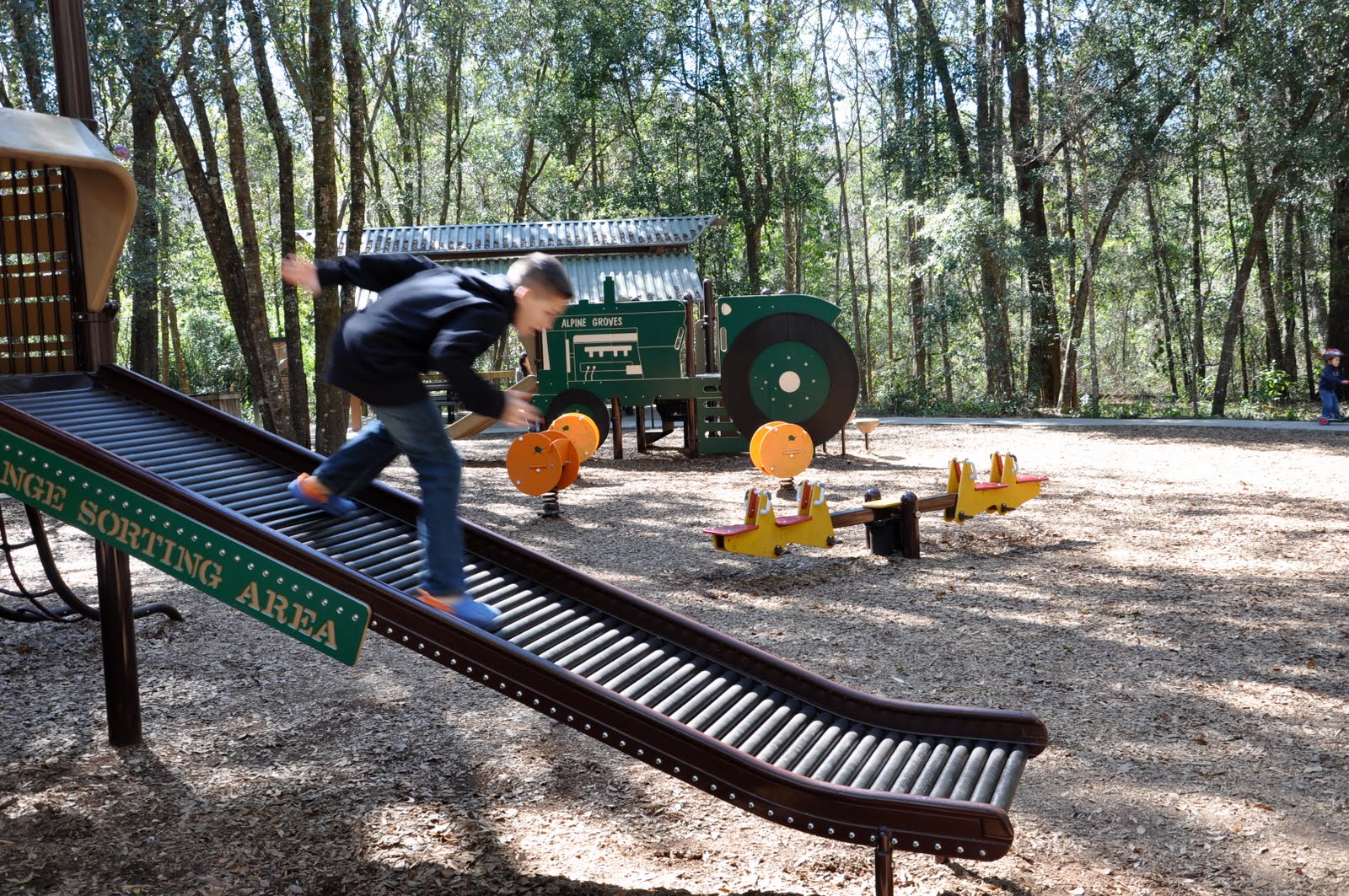
Today is Friday. We will be meeting friends at a nearby park for a short art session and fun. The children have been meeting with a mom in our homeschool group for informal art lessons. Before we release them for their wild park adventures, they will sketch any subject of their choosing. It's a beautiful place set on the St. Johns River with lots of interesting scenery.




It was a blessing to see my mother and brothers, and
 for the children to connect with their cousins, but anytime I have been away from home I feel like I need time to be still and enjoy the peace of returning to our sanctuary...so, I feel like each good vacation deserves a recovery vacation. After returning from our trip to Pensacola, we have taken a few more days away from academics for free time. Hehehe, I guess I can't say it has been a quiet, peaceful past few days. Two days ago I went to an optometrist for my first ever eye exam. Having never had my eyes dilated, I didn't know what to expect. I did not expect to pass out, but that's exactly what happened and anytime a person passes out for no good reason, the doctor is going to want to do tests. So, my peaceful spring break has turned into clinic visits. I prefer History lessons over being probed. Can't wait to return to our regular academic studies.
Today is Friday. We will be meeting friends at a nearby park for a short art session and fun. The children have been meeting with a mom in our homeschool group for informal art lessons. Before we release them for their wild park adventures, they will sketch any subject of their choosing. It's a beautiful place set on the St. Johns River with lots of interesting scenery.



Tuesday, March 30, 2010
Spring Break
There's a special magic in the air that arrives with spring break, which is similar to that of a full moon....maybe it's the pollen in the air that drives the senses wild and causes the mind to careen out of control. I felt it in the house today as the boys tried to demonstrate their "good" listening skills. Children are not robots. They weren't made with "off" buttons, or an "EASY" button for that matter. All I know is that sometimes it's better to join them, than to beat them, of course I would never mean that in the physical sense; however, when the statement was delivered, "when I hear that noise, I feel like banging on the source with my fist to get it to stop," the child replied, "that's OK mom, sometimes I feel like doing that to my brother, so don't feel left out," well, let's just say we all felt that magic of spring break in the air and had a good laugh. A good laugh is what we often need to get through a history lesson in which there is no field trip available that will take its place.
History class was never my favorite. As a grown-up, I can understand the pressures teachers are under to grab a childs attention and present him with information that is so important that you see his eyes staring back intently, hanging on each syllable you utter, which flows like a musical note from your lips. Well, that's how the teacher feels about the lesson, while the student cannot relate to the purpose of learning old things that happened long ago. Text books present the information in a boring, clinical tone; though making the information relevant to him is as challenging as producing a broadway show.
If ever I could use a mentor, it's definitely in the area of history. My educational style is not one that agrees with rote learning, but history is one subject where I have to stretch my imagination to be a "creative" teacher. I welcome any recommendations for a fun history curriculum.
History class was never my favorite. As a grown-up, I can understand the pressures teachers are under to grab a childs attention and present him with information that is so important that you see his eyes staring back intently, hanging on each syllable you utter, which flows like a musical note from your lips. Well, that's how the teacher feels about the lesson, while the student cannot relate to the purpose of learning old things that happened long ago. Text books present the information in a boring, clinical tone; though making the information relevant to him is as challenging as producing a broadway show.
If ever I could use a mentor, it's definitely in the area of history. My educational style is not one that agrees with rote learning, but history is one subject where I have to stretch my imagination to be a "creative" teacher. I welcome any recommendations for a fun history curriculum.
Subscribe to:
Posts (Atom)